


The Installer's Real-World Guide: Picking a Leveling System That Won't Waste Your Time or Money
Let's be brutally honest for a second. The "perfectly flat, lippage-free floor" promised by every tile leveling system box is a goal, not a guarantee. I've seen gorgeous, expensive large-format tiles installed with premium clips that still failed. I've also seen DIY jobs with the cheapest spacers on the market that turned out flawless. The difference wasn't magic, and it wasn't just the brand name on the bag. It was a fundamental mismatch between the tile leveling system choice and the reality of the job site. The biggest mistake you can make is thinking one system fits all. Your project size leveling strategy-whether it's a 30-square-foot powder room or a 3,000-square-foot showroom-isn't just about square footage. It's about physics, fatigue, budget, and the cold, hard math of labor hours. This is designed to help you make a leveling system selection based on how the work actually gets done, not just how it's marketed.
The Core Misconception: It's Not About "Leveling"
First, we need to reframe the problem. Marketing calls them "leveling systems," but that's misleading. A clip and wedge doesn't make an unlevel floor level. What it does is far more specific and powerful: it acts as a controlled tensioning device that pulls adjacent tile edges into the same plane while the mortar is still plastic. Its job is to overcome three things: minor tile warpage (common in large porcelain), tiny inconsistencies in your mortar bed, and the natural tendency for a heavy tile to tilt as you set it.
Therefore, your choice isn't "which system levels best?" They all can, in theory. Your choice is: "Which system applies the right amount of force, with the right control, at the right speed, for THIS specific job, without breaking me or the budget?" Get this wrong, and you're either wasting money on overkill or setting yourself up for a callback.
The Project Reality Matrix: Size, Scale, and What You're Really Signing Up For
Forget simple "small, medium, large" categories. Let's define projects by their true operational demands.
The "Weekend Warrior" Zone: Validation & Confidence (Under 100 sq. ft.)

- The Scene: A backsplash, a small bathroom floor, a fireplace surround. You're working alone, maybe with a helpful spouse. Pace is slow. The primary goal isn't just a good floor-it's learning that you can do it without creating a disaster.
- The Real Challenge: Information overload and "paralysis by analysis." You don't have muscle memory for tile setting yet.
- System Priority #1: Clarity and Forgiveness. You need a system that is intuitive. A basic, color-coded clip-and-wedge system (where you tap in a separate plastic wedge) is perfect here. Why? The act of tapping gives you direct, tactile feedback. You can feel the tension build and see the tile edge move. It's a teaching tool. The speed is irrelevant; the learning is everything.
- What to Buy: A small starter kit from a reputable DIY brand. Don't buy the 500-piece pro pack. You'll use 50.
- Core Takeaway for This Zone: Your investment is in your own education. The system's job is to help you succeed on this one project and build confidence for the next.
The "Serious Upgrade" Zone: Efficiency & Predictability (100 sq. ft. to 500 sq. ft.)
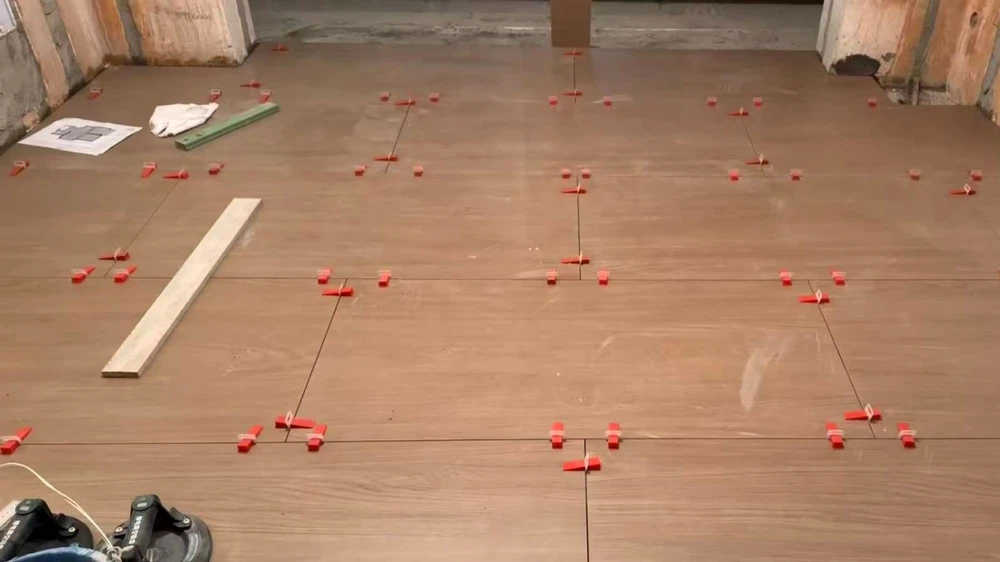
- The Scene: A master bathroom, a kitchen floor, an entire basement. This is a multi-day commitment with significant material cost. Mistakes are expensive. You're proficient with the basics, but you're not a production installer.
- The Real Challenge: Maintaining consistent quality and energy over a larger area, often while juggling life. Fatigue becomes a real factor.
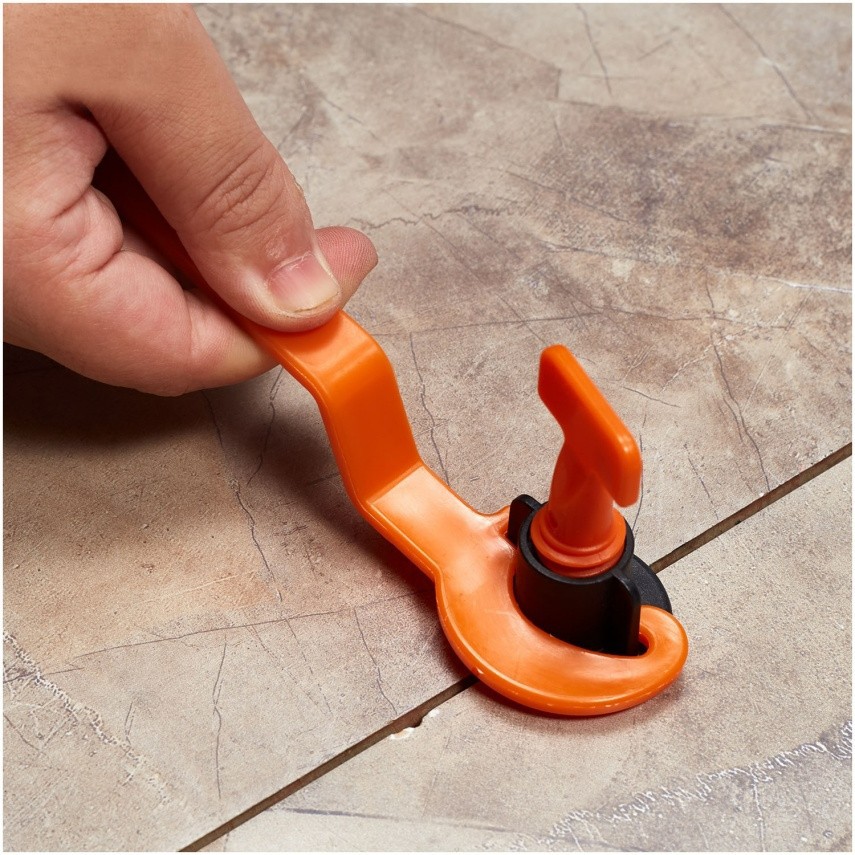
- System Priority #1: Reduced Physical Tax. Hammering 1,000 separate wedges on a large floor is exhausting. This is the zone where a self-locking wedge system or an entry-level tool-actuated system (like a spin-wrench) pays massive dividends. The mechanism does the work, saving your elbow and shoulder. Consistency improves because the system applies more uniform tension than your tired arm can.
- What to Buy: A mid-range system known for durability. Look for brands that sell at specialty tile stores, not just big-box retailers. This is a tool you'll use again.
The "Professional's Bread & Butter" Zone: Speed is Profit (500 sq. ft. to 2,500+ sq. ft.)
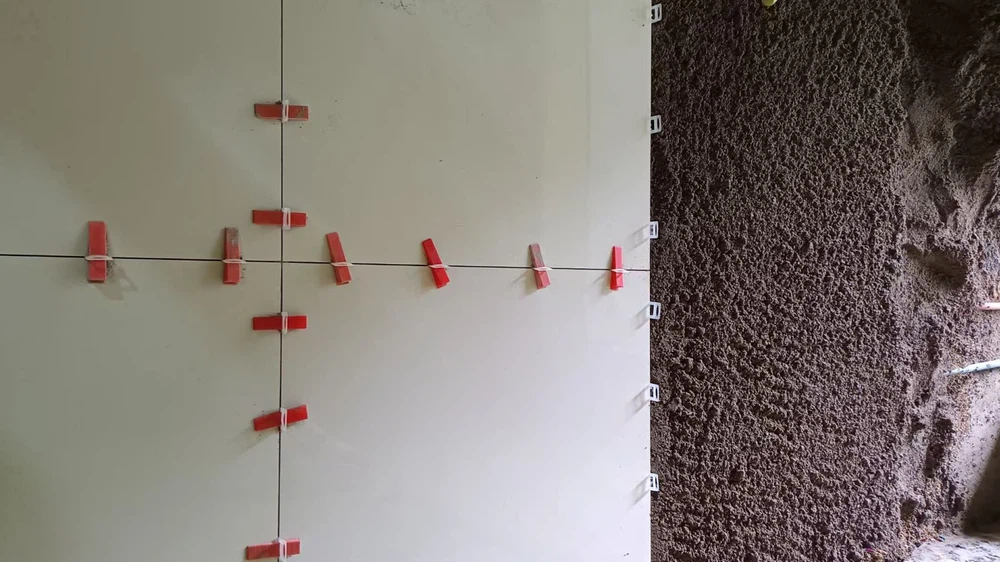
- The Scene: Whole-house remodels, open-concept areas, small commercial jobs. This is where tile installation shifts from a "project" to a "production process." Time is literally money. Crews may be involved.
- The Real Challenge: Throughput. Installing enough square footage per day to hit your margin. Every second saved per clip compounds dramatically. System reliability is non-negotiable-a broken clip or a jammed tool means wasted time.
- System Priority #1: Motions Per Minute. You need a system engineered to minimize labor. This means professional-grade, tool-actuated systems (pistol-grip tools, drill attachments). The tool places the cap and tensions it in one motion. Removal is fast and clean. The per-clip cost is higher, but the labor savings are astronomical. You're buying time.
- What to Buy: Invest in the ecosystem. Buy the brand's tool, their bulk clips, and their specific removal tool. Master that one system. Mixing and matching kills efficiency.
The Hidden Deciding Factors (That No One Talks About)
Beyond square footage, these are the make-or-break details that professionals weigh instantly.
1. The "Tile Personality" Assessment
Tiles are not inert slabs. They have character, and that character fights your leveling system.
- The Gentle Giant (Thick Porcelain Slabs): Massive and stiff. It won't bend easily. It requires a system with immense clamping force (high-end tool systems) to pull a warped center down. Think of it like moving furniture-you need strong, steady pressure.
- The Dramatic Diva (Natural Stone, Handmade Tile): Delicate, soft, or irregular. It cracks and chips under brute force. It requires a system with exquisite control, like a cam-action spinner that lets you apply tension in tiny, felt increments. You're performing surgery, not construction.
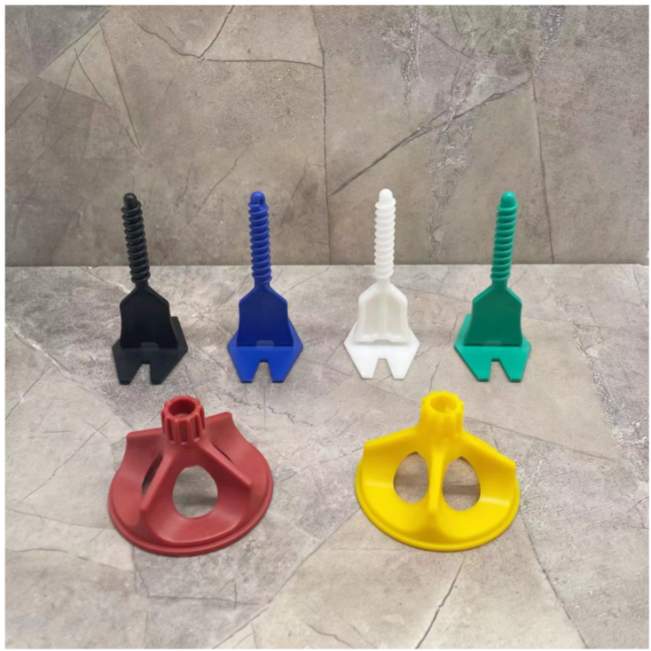
- The "Looks Flat But Isn't" Tile (Large-Format with a Crown): Many large tiles have a slight convex bow. A system that only pulls at the very edge can "bridge" the crown, leaving the center unsupported. You may need a hybrid approach: standard clips on the edges and specialized "spider" or "puck" systems in the field to pull the center down.
2. The Substrate's Dirty Secret
This is the most important sentence in this guide: A leveling system is designed to align tile edges. It is NOT designed to lift the center of a tile over a low spot in your floor. If your substrate is out of flat by more than 1/8" in 10 feet, you must fix that first with grinding, patching, or self-leveler. No clip system, no matter how expensive, can save you from a bad substrate. Choosing a system before verifying subfloor flatness is like buying racing tires for a car with a bent frame.
3. The Solo vs. Crew Dynamic
Working alone changes everything. A system that requires two hands to tension (one to hold, one to twist) is a nightmare for a solo installer who also has to butter and set tile. Look for systems where the clip has a good grip on the tile and the tensioning can be done one-handed. In a crew, you can have a dedicated "clipper" following the setter, which allows for much faster, more aggressive systems.
A Pragmatic Decision Framework: Ask Yourself These Questions
Go through this list in order. Your answers will point you to the right category.
- What's the actual, measurable area? (Be honest. Don't round down.)
- What is the SINGLE biggest challenge I face on this job? (Is it the tile's warpage? The hard deadline? My own sore back? The client's eagle eye?)
- Am I buying for this job only, or for my business/toolkit? This dictates your budget mindset.
- How does the tile itself want to fight me? (Check for warpage by placing two tiles face-to-face. If they rock, they're crowned.)
- Have I verified, with a 6-10 foot straightedge, that the floor is flat enough to even use a system effectively?
Real-World Brand Archetypes & What They're Built For
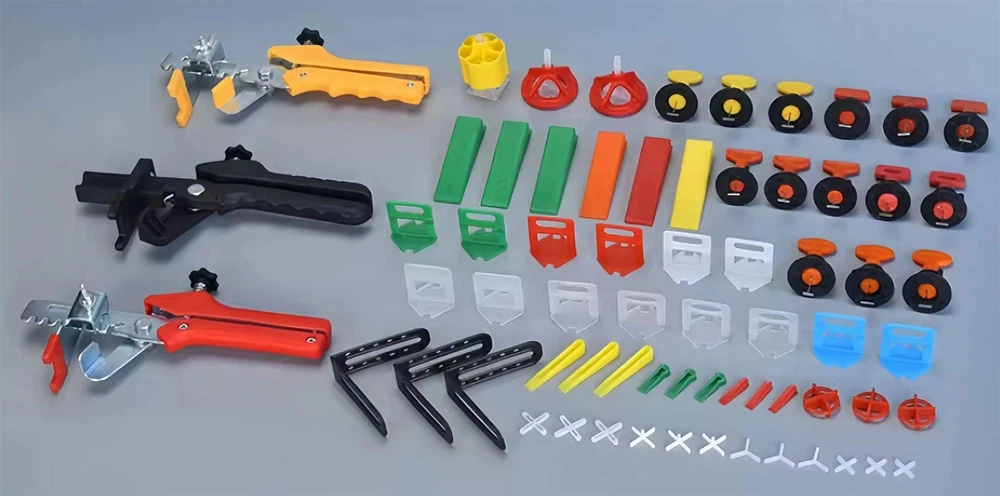
(Note: This is based on observed market use and installer consensus, not marketing.)
- The "Pro Starter Pack": Brands like some QEP systems or Raimondi's basic RLS. Great for the "Serious Upgrade" zone. Affordable, reliable, widely available. You'll outgrow them if you go pro, but they're a perfect bridge.
- The "Production Workhorse": Spin Doctor, Montolit Leveling. Beloved by installers in the "Bread & Butter" zone. The spin-wrench action is fast, controlled, and easy on the body. The go-to for high-volume residential and light commercial crews.
- The "Industrial Engine": Sigma Leveling Max, some proprietary systems from mortar companies (like Mapei). Built for unrelenting daily use on big commercial sites. Tools are heavier-duty, clips are often stronger. You're paying for absolute reliability when a truck full of tiles shows up on Monday morning.
Frequently Asked Questions (From the Job Site, Not a Forum)
I'm on a tight budget. Can I just use the leveling system on the outside edges of the room and "eyeball" the middle?
No. This creates a pivot point. The outer tiles are locked down, but the field tiles can still tilt relative to each other. Lippage travels. You need a distributed grid of tension points. If you must economize, use the system at every joint, but space them farther apart in the very center of large, stable tiles, never at the perimeter.
The wedge snapped off cleanly, but now there's a sharp plastic nub in my grout joint. What did I do wrong?
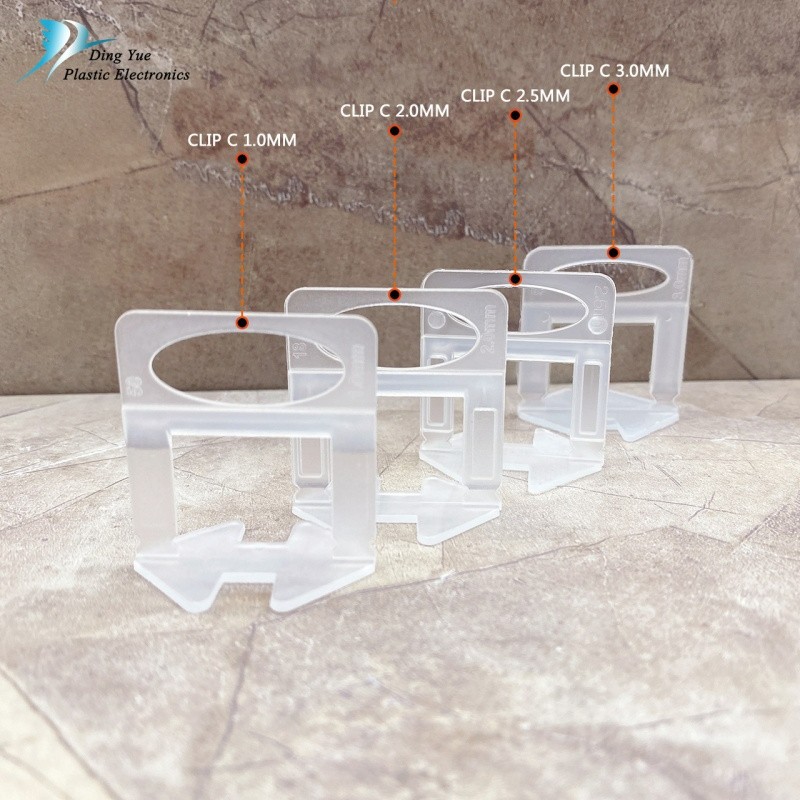
You likely used a clip designed for a 3mm joint on a job where you're using a 1/8" (3.175mm) spacer. The clip's "break line" is below the tile surface. Always match the clip size (1mm, 2mm, 3mm) to your actual spacer size, not the "close enough" size. A 2mm clip for a 1/8" joint is safer.
It's a hot, dry day and my mortar is skinning over before I can get the clips in. Is my system useless?
In those conditions, the system is fighting the environment. Your priority shifts to mortar management: work in smaller sections (like 10 sq. ft. at a time), keep the mortar in the bucket covered, and consider a mortar with a longer "open time" or a retarder additive. The system is only as good as the mortar it's pulling into.
Are the generic, no-name clips from the online marketplace a good deal?
It's a gamble. The plastic might be brittle, leading to breaks during installation. The molding tolerances might be poor, so wedges fit loosely or jam. For a small job, maybe. For anything where your reputation is on the line, the risk isn't worth the few dollars saved. Stick with brands that supply professional distributors-their quality control is linked to their reputation.
The Final, Unsexy Truth About Getting It Right
The perfect tile leveling system doesn't exist. The right one does. It's the one that disappears into the workflow of your specific project, becoming an extension of your process rather than an obstacle. It doesn't impress your clients with its brand name; it impresses them with the silent, solid feel of the floor when they walk across it in socks.
Your tile leveling system choice is ultimately a decision about how you value your own time, your body, and your pride in your work. For a weekend project, value simplicity and learning. For a living-room floor, value consistency and reduced fatigue. For a career, value speed, reliability, and the unspoken confidence that comes from knowing your tools won't let you down when the pressure is on. Choose based on that reality, and you'll choose right.
Hot Tags: choosing the right tile leveling system for your project size, China, manufacturers, suppliers, factory, customized, wholesale, buy


