

Precision Assembly Techniques for Multi-Component Plastic Parts and Products
In today's competitive manufacturing landscape, the assembly of multi-component plastic products represents a critical phase where design excellence meets production reality. Precision assembly techniques determine not only the final quality and functionality of plastic products but also significantly impact production efficiency, costs, and time-to-market. This comprehensive guide explores the advanced methodologies, technologies, and strategic considerations essential for achieving exceptional results in plastic part assembly across various industries. From automotive components to medical devices and consumer electronics, the principles of multi-component assembly discussed herein will provide valuable insights for engineers, product designers, and manufacturing professionals seeking to optimize their production processes and deliver superior products to market.
Fundamentals of Plastic Part Assembly
The assembly of plastic components requires a sophisticated understanding of material properties, joint design, and manufacturing processes. Unlike traditional manufacturing materials, plastics present unique challenges and opportunities due to their viscoelastic behavior, thermal expansion characteristics, and sensitivity to environmental conditions. Successful plastic part assembly begins with a holistic approach that considers the entire product lifecycle from design to end-use performance.
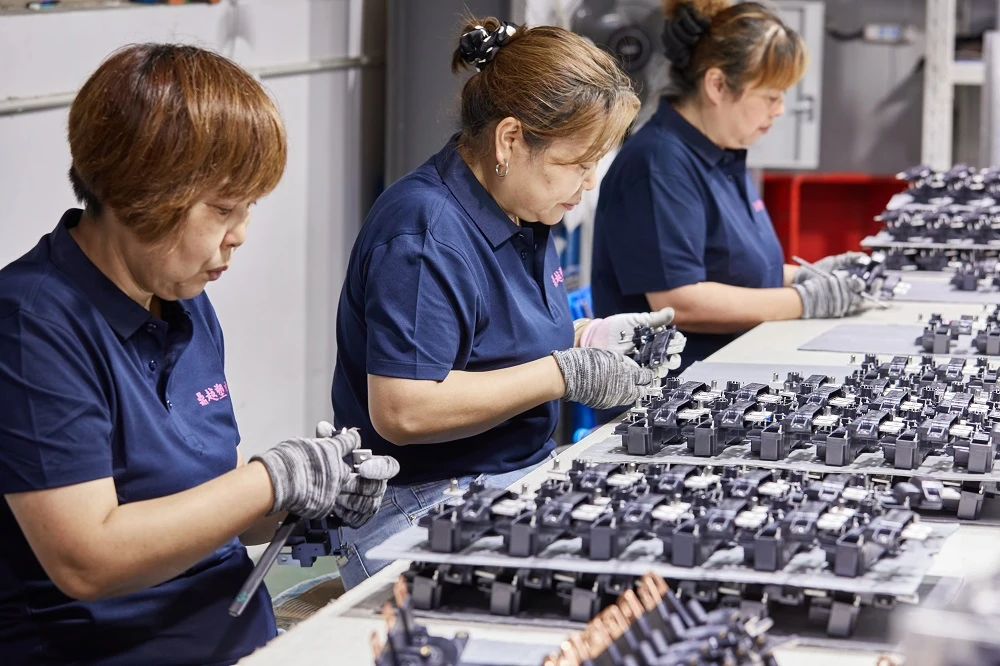
Modern manufacturing facilities have achieved remarkable precision levels, with some operations maintaining tolerances within ±0.001 inches across all assembly operations and reaching first-pass yield rates of 99.8% through advanced automation and precision quality control systems. These impressive results stem from implementing comprehensive quality control measures that include automated vision systems, CMM technology, and full component traceability from raw material to finished product.
"Precision in plastic assembly isn't just about measurements-it's about creating seamless integrations that enhance functionality, durability, and user experience while optimizing manufacturing efficiency."
Mechanical Assembly Techniques
Mechanical fastening methods remain widely used in multi-component assembly due to their reliability, simplicity, and disassembly capability. These techniques are particularly valuable when products require serviceability or when materials cannot be permanently joined through other methods.
Snap-Fit Assembly
Snap-fit connections represent one of the most efficient mechanical assembly methods for plastic components. These ingenious designs utilize the flexibility and resilience of plastics to create secure, interlocking joints without additional fasteners. Successful snap-fit implementation requires careful consideration of material selection, geometry design, and tolerance management.
Key design principles for snap-fit assemblies include:
- Material selection with appropriate flexibility and fatigue resistance
- Optimized beam geometry to distribute stress evenly
- Precise calculation of deflection requirements and engagement forces
- Incorporation of lead-in angles and guidance features for easy assembly
- Consideration of environmental factors affecting long-term performance
Snap-fit designs offer significant advantages in automated assembly environments, where they enable high-speed production with minimal components. The automotive industry, consumer electronics, and appliance manufacturers extensively utilize snap-fits for interior trim components, enclosure assemblies, and functional mechanisms.
Threaded Fasteners and Inserts
Threaded fasteners provide robust, reusable connections for plastic assemblies but require careful design consideration to avoid stress concentration and material failure. The selection of appropriate fastener types and installation methods is critical for achieving reliable, long-lasting connections.
For optimal results with threaded fasteners in plastics:
- Use thread-forming screws for softer plastics and thread-cutting screws for harder materials
- Implement boss designs with adequate wall thickness and reinforcement ribs
- Consider ultrasonic inserts for high-strength, wear-resistant threads
- Utilize washers to distribute load and prevent localized stress damage
- Apply torque-limiting drivers to prevent over-tightening and material damage
Metal inserts installed through ultrasonic, thermal, or press-in methods provide particularly durable threading solutions for applications requiring repeated disassembly and reassembly. These inserts distribute load effectively and withstand significantly higher torques than threads cut directly into plastic.
Welding and Fusion Techniques
Welding methods create permanent, molecular-level bonds between plastic components, resulting in assemblies with exceptional strength, sealing capability, and aesthetic continuity. The selection of appropriate welding techniques depends on material compatibility, part geometry, production volume, and performance requirements.
Ultrasonic Welding
Ultrasonic welding stands as one of the most efficient and widely used methods for joining thermoplastic components. This process uses high-frequency mechanical vibrations (typically 20-40 kHz) to generate frictional heat at the joint interface, creating a molecular bond without external adhesives or fasteners.
The ultrasonic welding process offers several distinct advantages:
- Extremely fast cycle times (often less than 2 seconds)
- Clean, precise joints without consumables
- Excellent reproducibility and process control
- Strong, hermetic seals suitable for demanding applications
- Compatibility with automation and high-volume production
Successful ultrasonic welding requires careful joint design, typically incorporating energy directors that concentrate vibrational energy at the intended bond line. Material selection is also critical, as amorphous thermoplastics generally weld more effectively than crystalline materials.
Vibration Welding
Vibration welding utilizes linear or orbital relative motion between components to generate frictional heat and create strong, permanent bonds. This method is particularly effective for larger parts and those with complex joint geometries that might challenge other welding techniques.
The vibration welding process typically involves four distinct phases:
- Initial contact and surface preparation
- Friction phase generating heat through mechanical motion
- Transition phase where motion slows and material begins to flow
- Hold phase where pressure is maintained during cooling and solidification
Vibration welding excels with larger components and can join both similar and dissimilar materials, provided they have compatible melting temperatures and chemical affinity. Automotive applications frequently utilize vibration welding for fluid reservoirs, intake manifolds, and other large structural components.
Laser Welding
Laser welding represents the pinnacle of precision in plastic assembly, offering exceptionally controlled, clean, and precise joining with minimal particulate generation or material degradation. This process works by transmitting laser energy through one component (transmissive material) to be absorbed by the second component (absorptive material) at the joint interface.
Key advantages of laser welding include:
- Non-contact process eliminating tool wear and particulate generation
- Extremely precise energy control for delicate components
- Minimal thermal stress and distortion
- Excellent reproducibility and process monitoring capabilities
- Clean, aesthetically perfect joints without flash or particulates
Laser welding finds particular application in medical devices, optical components, and electronics packaging where cleanliness, precision, and minimal stress are paramount requirements.
Adhesive Bonding Techniques
Adhesive bonding offers unique advantages for joining dissimilar materials, creating stress-distributing bonds, and achieving exceptional aesthetic results. Modern adhesive technologies provide solutions for virtually every plastic assembly challenge, from high-temperature automotive applications to medical devices requiring biocompatibility.
Material Compatibility and Selection
Successful adhesive bonding begins with understanding material compatibility and selecting the appropriate adhesive chemistry for specific plastic combinations. Different plastic families exhibit varying surface energies and chemical compositions that significantly affect adhesive performance.
Critical considerations for adhesive selection include:
- Surface energy and wettability of substrate materials
- Chemical compatibility between adhesive and substrates
- Environmental resistance requirements (temperature, humidity, chemicals)
- Mechanical property requirements (flexibility, strength, impact resistance)
- Regulatory compliance needs (FDA, USP Class VI, UL)
- Process considerations (cure time, application method, fixturing needs)
Common adhesive chemistries for plastic assembly include cyanoacrylates for fast curing bonds, epoxies for high strength and environmental resistance, UV-curables for rapid processing, and structural acrylics for difficult-to-bond substrates.
Surface Preparation and Treatment
Proper surface preparation is arguably the most critical factor in successful adhesive bonding. Plastic surfaces often contain mold release agents, plasticizers, and other contaminants that must be removed to achieve optimal adhesion.
Effective surface preparation techniques include:
- Mechanical abrasion to increase surface area and remove contaminants
- Chemical cleaning with appropriate solvents to remove oils and residues
- Plasma treatment to increase surface energy and improve wettability
- Flame treatment for polyolefins and other low-energy surfaces
- Primer application to promote adhesion for difficult-to-bond materials
Advanced manufacturing facilities often implement automated surface treatment systems that ensure consistent, reproducible surface conditions before adhesive application. This consistency is essential for achieving reliable bond performance in high-volume production.
Advanced Automation in Plastic Assembly
Modern precision assembly operations increasingly rely on advanced automation technologies to achieve the consistency, speed, and accuracy demanded by today's markets. Automated assembly systems integrate various joining technologies with sophisticated material handling, inspection, and process control systems.
Robotic Assembly Systems
Robotic systems bring unprecedented flexibility and precision to plastic component assembly. Modern collaborative robots (cobots) work alongside human operators, handling repetitive tasks while maintaining exceptional accuracy. These systems can adapt to different product configurations through simple reprogramming, making them ideal for high-mix production environments.
Advanced robotic assembly systems typically incorporate:
- Vision systems for part identification, orientation, and inspection
- Force sensing for delicate assembly operations and quality verification
- Tool changers for handling different assembly processes
- Integrated process monitoring and data collection
- Seamless integration with other automation equipment
These systems achieve remarkable precision, with some facilities reporting positioning accuracy within ±0.02mm while maintaining speeds of up to 800 cycles per minute for pick-and-place operations.
Integrated Quality Assurance
Modern automated assembly systems incorporate comprehensive quality assurance measures throughout the assembly process rather than as a separate final inspection step. This integrated approach to quality management significantly reduces defect rates and improves overall process capability.
Advanced quality assurance technologies include:
- In-process monitoring of critical assembly parameters (force, distance, time)
- Machine vision systems for dimensional verification and defect detection
- Non-contact sensors for position verification and alignment confirmation
- Real-time statistical process control (SPC) and data analytics
- Automated traceability systems tracking components through entire process
These integrated quality systems enable manufacturers to achieve and maintain first-pass yield rates exceeding 99.8% while providing comprehensive data for continuous process improvement.
Design for Assembly Principles
Successful multi-component assembly begins long before production with thoughtful design that considers manufacturing requirements alongside functional performance. Design for Assembly (DFA) principles specifically address the ease and efficiency with which products can be assembled, directly impacting production costs, quality, and reliability.
Key DFA Considerations
Effective DFA implementation requires attention to numerous factors that influence assembly efficiency and reliability. These considerations should be addressed early in the design process when changes are least costly to implement.
The most impactful DFA principles include:
- Minimizing the number of components through rationalization and integration
- Designing parts for easy handling and orientation identification
- Standardizing components and fasteners across product families
- Creating modular subassemblies that can be tested before final assembly
- Incorporating self-locating and self-fixturing features
- Ensuring adequate access and visibility for assembly operations
- Selecting assembly methods appropriate for production volume and capabilities
Companies that systematically apply DFA principles typically achieve 30-50% reductions in part count and comparable reductions in assembly time and cost while improving product quality and reliability.
Tolerance Management and Stack-Up Analysis
Precision assembly requires careful management of dimensional tolerances across multiple components. Tolerance stack-up analysis ensures that accumulated variations across components do not compromise assembly fit, function, or performance.
Effective tolerance management involves:
- Establishing realistic tolerances based on manufacturing capabilities
- Identifying critical dimensions that directly affect assembly and function
- Applying geometric dimensioning and tolerancing (GD&T) principles
- Conducting statistical analysis of tolerance stack-ups
- Implementing design features that accommodate or compensate for variation
Advanced manufacturers increasingly utilize digital twin technology to simulate tolerance stack-ups and identify potential issues before committing to tooling, significantly reducing development time and cost while improving first-time quality.
Industry-Specific Applications
Precision assembly requirements vary significantly across industries based on product function, regulatory environment, and performance expectations. Understanding these industry-specific requirements is essential for selecting appropriate assembly methods and ensuring product success.
Medical Device Assembly
Medical device assembly demands exceptional precision, cleanliness, and traceability. Regulatory requirements often dictate specific materials, processes, and documentation practices that must be rigorously followed.
Key considerations for medical device assembly include:
- Biocompatibility of all materials including adhesives and process aids
- Validation of assembly processes and equipment
- Comprehensive documentation and traceability requirements
- Cleanroom compatibility for certain device classifications
- Sterilization compatibility for terminally sterilized devices
Medical device manufacturers increasingly utilize technologies like laser welding and UV-curing adhesives that minimize particulate generation and provide clean, consistent results suitable for critical healthcare applications.
Automotive Component Assembly
Automotive applications demand robust, reliable assemblies capable of withstanding harsh environmental conditions while maintaining precise function over extended service life. Automotive assembly often involves joining dissimilar materials and creating complex systems from multiple subassemblies.
Automotive assembly challenges include:
- Vibration resistance and long-term durability requirements
- Temperature cycling from extreme cold to engine compartment heat
- Exposure to fuels, oils, and other automotive fluids
- High-volume production with consistent quality
- Lightweighting requirements impacting material selection
Automotive manufacturers commonly employ vibration welding for large components, ultrasonic assembly for smaller features, and sophisticated mechanical fastening systems for structural applications.
Frequently Asked Questions
What is the most precise method for assembling plastic components?
Laser welding typically offers the highest precision for plastic assembly, with positioning accuracy within microns and minimal thermal distortion. However, the optimal method depends on material compatibility, part geometry, and production requirements. For complex multi-material assemblies, often a combination of techniques provides the best results.
How do I select the right assembly method for my application?
Method selection should consider material compatibility, production volume, performance requirements, and cost constraints. High-volume production often justifies more sophisticated equipment like ultrasonic welders, while lower volumes may favor adhesive bonding or mechanical fastening. Material compatibility often dictates available options, with some plastics lending themselves better to specific joining methods.
What are the biggest challenges in multi-component plastic assembly?
The most significant challenges include managing tolerance stack-ups across multiple components, ensuring consistent material properties, achieving and maintaining precise alignment, and selecting compatible assembly methods for different materials. Environmental factors like thermal expansion and chemical exposure also present substantial challenges for long-term performance.
How important is surface preparation for adhesive bonding?
Surface preparation is critically important, often determining up to 80% of final bond strength and durability. Proper surface treatment removes contaminants, increases surface energy, and creates micro-mechanical anchoring sites. Neglecting surface preparation is the most common cause of adhesive bond failures.
Can dissimilar plastics be successfully assembled?
Yes, dissimilar plastics can be assembled using appropriate methods, but careful consideration must be given to material compatibility, thermal expansion coefficients, and chemical resistance. Adhesive bonding often works well for dissimilar materials, while welding methods require compatible melting temperatures and chemical affinity.
Conclusion: Achieving Excellence in Precision Assembly
Precision assembly of multi-component plastic products represents a sophisticated intersection of materials science, mechanical engineering, and manufacturing technology. The techniques and principles discussed-from advanced welding methods and adhesive technologies to automated systems and design optimization-provide a comprehensive toolkit for creating high-quality, reliable products across industries.
As manufacturing continues to evolve toward greater integration, miniaturization, and performance demands, the importance of precision assembly techniques will only increase. The most successful manufacturers will be those who view assembly not as a separate production step but as an integral consideration throughout the product development process, from initial concept to final production.
By mastering the various assembly methods, understanding material interactions, implementing advanced automation, and applying Design for Assembly principles, manufacturers can achieve exceptional results in plastic part assembly-delivering products that meet exacting performance standards while optimizing production efficiency and cost-effectiveness. The future of multi-component assembly lies in continued innovation, integration, and refinement of these techniques to meet the ever-increasing demands of modern products and applications.
"In precision assembly, the whole truly becomes greater than the sum of its parts-but only when each part is joined with expertise, care, and appropriate technology."