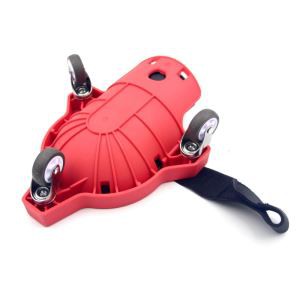


Choosing the Best Rolling Knee Pads for Construction and Tiling: The Ultimate Buyer's Guide
For professionals in construction, flooring, and tiling, knee health is not a luxury-it's a career prerequisite. The traditional act of kneeling, repeated hundreds of times daily, exacts a cumulative toll that leads to chronic pain, lost workdays, and shortened careers. In this demanding landscape, rolling knee pads have emerged as a revolutionary tool, fundamentally redefining how tradespeople interact with their workspace. But with a market flooded by options ranging from flimsy novelty items to industrial-grade equipment, selecting the right system is a critical decision that impacts safety, productivity, and long-term well-being. This definitive guide moves beyond basic specifications to examine the engineering principles, ergonomic science, and job-site intelligence behind superior rolling knee pad systems. We will dissect how the right equipment not only protects your body but transforms your workflow, enabling seamless mobility that turns grueling labor into efficient, sustainable craftsmanship.

The Anatomy of a High-Performance Rolling Knee Pad System
A professional rolling knee pad is not a simple seat on wheels; it is a integrated system of biomechanical support and mobility engineering. Understanding its components is the first step to making an informed choice.
Core Chassis and Load-Bearing Structure
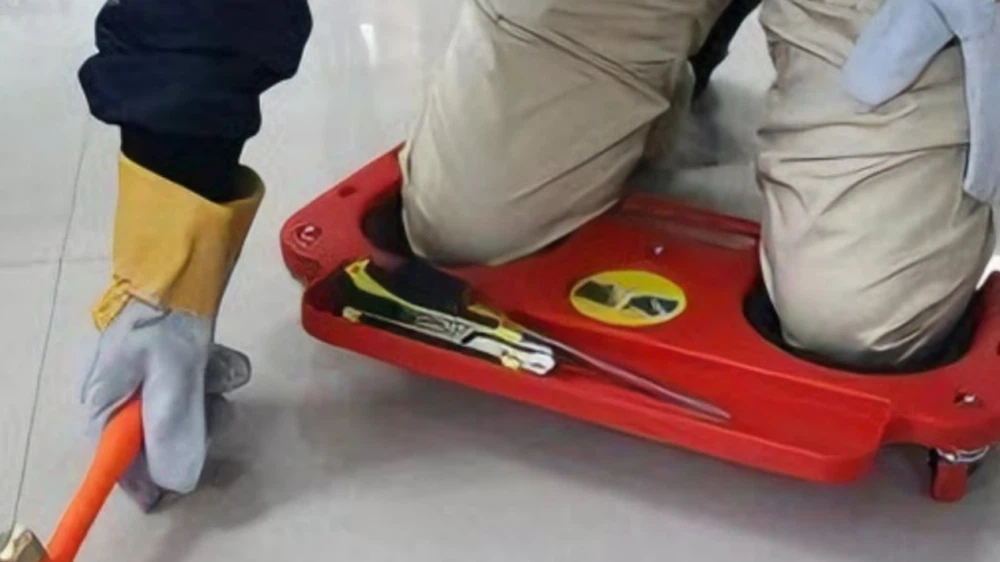
The foundation of any quality system is a chassis engineered for stability and durability. High-grade, reinforced polymer composites or aircraft-grade aluminum form the core platform, designed to distribute a user's weight evenly without flex or torsion. The geometry is crucial: a wider base enhances stability when leaning into work, while a tapered profile allows for maneuverability in tight spaces. The connection points between the platform and the wheel assembly are fortified with metal gussets or through-bolt construction to withstand the lateral stresses of daily use, preventing the catastrophic failure that can occur with cheap, riveted designs.
The Mobility Engine: Wheel and Caster Assembly

This is the system's defining feature. Quality is distinguished by:
- Wheel Material & Diameter: Polyurethane wheels offer a balance of floor protection and durability, while larger diameters (over 3 inches) roll more easily over debris, grout lines, and uneven substrates. Solid rubber or thermoplastic elastomer (TPE) wheels provide superior shock absorption on rough concrete.
- Bearing System: Sealed, precision ball bearings are non-negotiable for smooth, effortless rotation and longevity. Shielded bearings keep out dust, sand, and mortar, which are the primary killers of cheap caster systems.
- Swivel Mechanism & Lock: A true 360-degree swivel with a positive locking brake is essential. The lock must securely immobilize the pad on inclines or when applying downward force during tasks like tile setting. The swivel should rotate freely without "shimmy" or wobble, which indicates poor tolerances.
Kneeling Platform: The Interface of Comfort
The platform is where the user meets the machine. A multi-layer design is standard for professionals:

- Base Layer: A rigid, ventilated shell that provides structural integrity and allows airflow to reduce heat and moisture buildup.
- Dampening Layer: Often made of closed-cell foam or gel-infused polymer, this layer absorbs shock and vibration from rough surfaces.
- Comfort Layer: High-density, slow-recovery memory foam or specialized orthopedic foam that contours to the knee and distributes pressure away from the sensitive patella.
- Wear Surface: A durable, water-resistant, and easy-to-clean cover made from materials like ballistic nylon or heavy-duty polyester. A non-slip texture is critical for security.
Ergonomics in Motion: The Science of Protection and Productivity
The true value of a rolling knee pad is measured in its ergonomic payoff-preventing injury while enhancing work capacity.
Biomechanical Advantage and Injury Prevention
Traditional kneeling creates focal points of extreme pressure on the kneecaps and compresses the menisci. A high-quality rolling system solves this through:
- Pressure Distribution: The large platform area disperses body weight over nearly 300 square inches, reducing peak pressure on the knees by up to 80% compared to traditional caps.
- Spinal Alignment: By eliminating the constant stand-up/sit-down cycle, the spine maintains a neutral posture. This drastically reduces compressive forces on the lumbar discs and fatigue in the lower back and quadriceps.
- Reduced Metabolic Cost: Studies in occupational ergonomics show that using a mobile kneeling system can reduce the energy cost of a task by 30% or more, translating directly to reduced fatigue and increased endurance over a shift.
Workflow Integration and Efficiency Metrics
The productivity gain is quantifiable. A tradesperson installing flooring might perform 300-500 kneel-stand cycles in a day. Each cycle consumes energy and 5-10 seconds of time. A rolling pad eliminates this cycle, saving 25-50 minutes of productive time and conserving enough energy to significantly improve focus and output quality in the final hours of the workday.
Application-Specific Selection: Matching the Pad to the Profession
There is no universal "best" pad; the optimal choice is dictated by the primary work environment and tasks.
For the Tile and Flooring Professional

Tile setters and floor layers require a tool that is precise, protective of finished surfaces, and adaptable.
- Key Needs: Surface protection (non-marking, soft wheels), high maneuverability for intricate cuts, and a low profile for use with thin-set mortar beds.
- Ideal Specs: Non-marking polyurethane wheels (60-70A durometer), a medium-size platform for stability during beating-in, and a tool tray or holder for spacers and cutters. A brake that can be engaged with a toe-tap is invaluable.
For the General Construction and Carpentry Worker
Carpenters, drywallers, and framers encounter debris, uneven surfaces, and need robust durability.
- Key Needs: Extreme durability, ability to traverse obstacles (nails, wood scraps), and high weight capacity.
- Ideal Specs: Large, pneumatic or solid rubber tires (4+ inches), a heavy-duty steel or reinforced composite frame, and a high-traction knee platform cover. A quick-release mechanism for easy transport up ladders is a major plus.
For the Maintenance and HVAC Technician
These professionals work in confined spaces and need extreme mobility and compact design.
- Key Needs: Compact footprint, ability to pivot in tight spaces, and resistance to oils and chemicals.
- Ideal Specs: A compact, "scooter"-style design, chemical-resistant rubber wheels and covering, and often a handle that doubles as a pull/push bar for propulsion in tight crawl spaces.
Critical Evaluation Metrics: Beyond the Marketing Hype
When comparing models, assess them against these rigorous, performance-based criteria.
| Evaluation Metric | What to Look For | Red Flags to Avoid |
|---|---|---|
| Weight Capacity & Stability | Rated capacity 100+ lbs over user weight. Wide wheelbase. Low center of gravity. | Wobble or tip when leaning. Frame flex under load. Vague weight rating ("250+ lbs"). |
| Mobility & Maneuverability | Smooth, silent rolling on relevant surface. Precise 360° swivel without stick-slip. Effective brake. | Grinding bearings, sticky swivel, weak brake that slips on a slight incline. |
| Comfort & Long-Duration Use | Thick, multi-density foam. Breathable, waterproof top cover. Ample knee platform space. | Thin, bottomed-out foam. Plastic or vinyl cover causing sweat. Platform too small for knee placement. |
| Durability & Construction | Reinforced stress points. Metal axle/wheel hubs. Double-stitched, bar-tacked seams. | Plastic rivets at pivot points. Thin, hollow tubing. Glued or single-stitched seams. |
| Job-Site Practicality | Easy to clean. Tool storage options. Manageable weight for transport. | Fabric that traps mortar/dust. No way to carry tools. Awkward or heavy to carry. |
The Investment Perspective: Total Cost of Ownership Analysis
The price tag is only the initial cost. A true evaluation considers the Total Cost of Ownership (TCO) over the tool's lifespan.
Initial Cost vs. Long-Term Value
A premium pad costing $150-$300 may seem high compared to a $50 model. However, the analysis changes when considering:
- Replacement Frequency: A cheap pad may fail in 6-12 months on a commercial site, requiring repeated purchase. A professional-grade model should last 3-5 years minimum.
- Healthcare & Downtime Costs: A single knee injury from inadequate support can cost thousands in treatment and lost income. The pad is a preventive investment.
- Productivity Premium: The time saved and quality improvement from using a superior tool can pay for itself on a handful of jobs.
Warranty and Manufacturer Support as Indicators
A robust warranty (e.g., 2-5 years) is not just a safety net; it's a signal of the manufacturer's confidence in their product's durability. It indicates the use of quality materials and construction methods that a company is willing to stand behind.
"I fought the switch to rolling pads for years, thinking they were a gimmick. After blowing out my knee and needing surgery, I had no choice. The difference isn't just comfort-it's capability. I can work a full day laying tile without the debilitating evening pain. I'm more precise because I'm not fighting fatigue, and I'm at least 20% faster. My only regret is not buying a professional-grade set from day one; the cheap ones I tried first nearly turned me off the concept completely." – Marco Silva, Union Tile Setter with 22 years of experience.
Advanced Features and Innovations
The market is evolving with features that address specific professional pain points.
Integrated Tool and Material Management
Leading models now include integrated solutions for the tools of the trade:
- Modular Tool Trays: Removable trays that sit within the frame for tiles, spacers, knives, and measuring tools.
- Material Transport: Some heavy-duty models feature a small integrated dumpster or bag holder for debris collection.
- Power Tool Integration: Brackets or slots designed to hold specific cordless drills or impact drivers securely.
Adaptive and Specialized Designs
Innovation continues to meet niche demands:
- Convertible Designs: Pads that quickly convert into a low seat or a knee-walking creeper.
- Electric-Assist Models: Battery-powered models with a small drive wheel for effortless movement, ideal for very large, open areas.
- Articulating Knee Platforms: Platforms that pivot independently to maintain full contact with uneven surfaces like sloped roofs or landscaped areas.
Frequently Asked Questions (FAQ)
Are rolling knee pads suitable for all types of flooring installation?
They are excellent for most hard-surface flooring like tile, hardwood, laminate, and vinyl plank. For soft surfaces like carpet padding, the wheels may sink in or snag. Always ensure wheels are clean and non-marking for finished surfaces. For delicate surfaces like freshly sealed hardwood, use a protective floor runner.
How do I maintain and clean my rolling knee pads?
Maintenance is straightforward but critical. After each use, wipe down the platform and wheels with a damp cloth to remove dust and debris. Periodically, check wheel axles for hair or string buildup and remove it. Inspect the brake mechanism for proper function. For deep cleaning, use a mild soap and water solution; avoid harsh chemicals that can degrade foams and plastics. Store in a dry place.
Can they handle transitions between different floor heights?
This depends on wheel size and design. Larger wheels (4-inch diameter and up) can typically handle transitions up to 3/4-inch, such as moving from a subfloor to a backer board. For more significant height changes, you will need to lift the pad over the obstacle. They are not designed for climbing stairs or curbs.
What is the learning curve for using them effectively?
Most users adapt within 30-60 minutes. The key is to use your upper body and core to pull yourself along, rather than pushing with your toes, which is less efficient and can strain your calves. Practice moving in straight lines, arcs, and pivoting. Within a day or two, the motion becomes second nature and significantly faster than standing and kneeling.
Core Takeaways for the Professional Buyer
- Prioritize Joint Health as a Capital Asset: Your knees are your career. Invest in protection proportional to the value of your livelihood.
- Match the Tool to the Task: The "best" pad is the one engineered for your specific trade, common surfaces, and daily challenges.
- Evaluate Total Cost, Not Just Price: Consider durability, warranty, and the potential cost of injury or inefficiency when assessing value.
- Comfort is a Productivity Feature: Discomfort is a distraction. Superior padding and ergonomics directly contribute to focus, precision, and output.
- Test Before You Invest (If Possible): If you can, try a model on a similar surface to your work. The feel of the roll, the stability, and the comfort are subjective and critical.
Conclusion: An Investment in Craftsmanship and Longevity
Choosing the best rolling knee pad is a decision that resonates far beyond a simple tool purchase. It is an investment in personal health, professional efficiency, and the sustainable mastery of one's craft. In the demanding trades of construction and tiling, where the body is the primary tool, protecting it is the first step toward excellence. A superior rolling knee pad system does more than mitigate pain-it re-engineers the work process itself, transforming a limiting, punishing posture into a platform for fluid, powerful, and precise work. By carefully selecting a system based on the rigorous criteria of durability, ergonomics, and job-site suitability, professionals equip themselves not just to work harder, but smarter, longer, and with a quality of life that honors a lifetime of skill. The right pad becomes an indispensable partner in building a career, and a legacy, that stands the test of time.
Hot Tags: the best rolling knee pads for construction and tiling, China, manufacturers, suppliers, factory, customized, wholesale, buy, Mechanics Rolling Knee Pad, construction knee pad, rolling knee pad, knee pads with wheels, Rolling Knee Pads For Flooring Installers, Knee Blades Rolling Knee Pads