

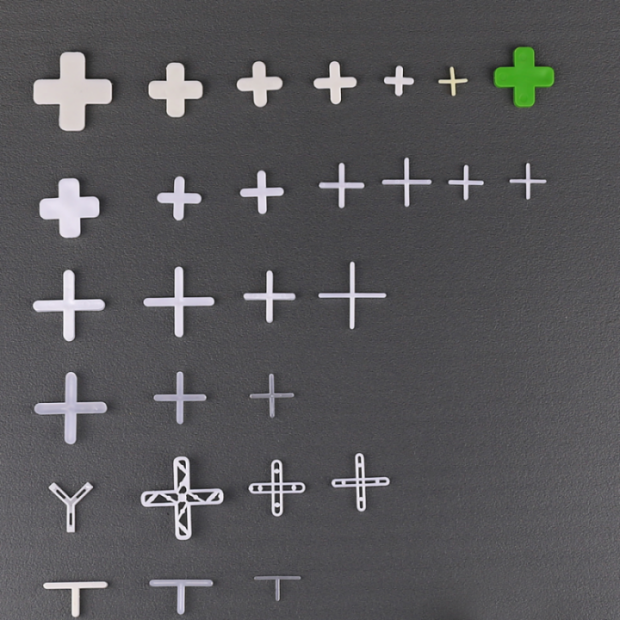


Tile Spacers: The Key to Achieving Perfect Grout Lines

In the world of tile installation, the difference between an amateur job and a professional masterpiece often comes down to the smallest of details. While the eye may be drawn to the tile itself, it is the precise, uniform lines between them-the grout lines-that create a sense of order, quality, and craftsmanship. Achieving this perfection is not a matter of chance or extraordinary skill alone; it is the result of using a simple, yet profoundly important tool: the tile spacer. These unassuming pieces of plastic are the unsung heroes of any successful tiling project, acting as the fundamental guide for consistency and accuracy. This comprehensive guide will explore the critical role of tile spacers in creating flawless grout lines. We will delve into the different types, the science behind proper spacing, and the step-by-step techniques that professionals use to ensure every installation is perfect. Whether you are a seasoned contractor or a dedicated DIYer, understanding and mastering the use of tile spacers is the most significant step you can take toward achieving a result that is both beautiful and built to last.
What Are Tile Spacers and Why Are They Indispensable?
At their core, tile spacers are small, precision-molded tools placed at the corners where tiles meet. Their sole purpose is to maintain a consistent gap between tiles throughout the installation process. This gap serves two critical functions: it provides space for the grout, which locks the tiles in place and protects the edges from chipping, and it allows for the natural expansion and contraction of the tiles and substrate due to temperature and humidity changes. Without spacers, achieving any semblance of uniformity is nearly impossible, leading to a sloppy, unprofessional appearance and potential long-term failure of the installation.
The Evolution of the Tile Spacer

The concept of spacing tiles is as old as tiling itself. Early installers used improvised materials like nails, pieces of wood, or even cardboard to create gaps. The invention of standardized, plastic tile spacers revolutionized the industry by introducing a level of consistency and efficiency previously unattainable. Today, spacers are engineered for specific applications, made from durable plastics that are strong enough to support the weight of tiles but easy to remove once the adhesive has set.
The Anatomy of a Grout Line

It's important to distinguish between the spacer itself and the final grout line. The spacer creates the gap, while the finished grout line is the visible joint filled with grout. The size of the spacer does not always equal the width of the final grout line; the appearance can be influenced by the tile's edge profile (e.g., a rectified edge versus a cushioned edge). However, the spacer is the primary tool for controlling the joint width from the very beginning.
The Critical Importance of Perfect Grout Lines
Perfect grout lines are not merely an aesthetic preference; they are a hallmark of quality and a prerequisite for a durable installation.
Aesthetic and Functional Benefits
- Visual Harmony: Uniform lines create a clean, orderly appearance that allows the beauty of the tile pattern to shine. Irregular lines, in contrast, draw the eye to the mistakes and disrupt the visual flow of the room.
- Professional Credibility: For contractors, consistent grout lines are a direct reflection of their skill and attention to detail, impacting their reputation and ability to command higher prices.
- Grout Performance: A consistent gap allows for even application and tooling of the grout, resulting in a joint that is uniform in color, density, and strength. Uneven gaps can lead to weak points where grout may crack or crumble prematurely.
Technical and Structural Necessities
- Expansion and Contraction: All building materials expand and contract. The grout joint acts as a crucial expansion joint, accommodating these minor movements without putting stress on the tiles. Without adequate space, tiles can press against each other, leading to cracks, pops, or a failure of the adhesive bond.
- Substrate Imperfections: No substrate is perfectly flat. Consistent grout lines help to mask minor substrate irregularities, creating the illusion of a perfectly flat surface even when slight undulations are present.
- Preventing Lippage: While primarily addressed with leveling systems, proper spacing works in tandem with these tools to ensure tiles are not only level but also evenly separated, contributing to an overall flat plane.
A Comprehensive Guide to Tile Spacer Types
Choosing the right spacer for the job is the first step toward success. Spacers come in various shapes and sizes, each designed for a specific purpose.

1. Cross Spacers (Plus Sign Spacers)
This is the most common and versatile type of spacer. Shaped like a plus sign (+), it is designed to be placed at the intersection of four tiles. The arms of the cross create equal gaps on all sides. They are available in a wide range of sizes, typically from 1/16 inch (1.5 mm) to 3/8 inch (10 mm).
- Best for: Standard grid patterns, wall tiles, and most floor tile installations.
- Pros: Excellent all-arounder, provides multi-directional consistency.
- Cons: Can be difficult to remove from tight corners if the adhesive oozes excessively.
2. T-Spacers
As the name suggests, these are shaped like a "T". They are used specifically for creating running bond or staggered patterns, such as a classic brickwork or subway tile layout. The top of the "T" spaces the tiles vertically, while the leg of the "T" ensures the offset between rows is consistent.
- Best for: Running bond patterns, herringbone patterns (at the transitions).
- Pros: Essential for achieving perfect, consistent offsets in staggered patterns.
- Cons: Limited to specific pattern applications.
3. Wedge Spacers
Wedge spacers are a two-part system used in conjunction with leveling clips. A plastic wedge is inserted into a clip that is anchored under the tiles. As the wedge is tapped down, it applies downward and inward pressure to eliminate lippage. The wedge itself also acts as a spacer, ensuring a consistent gap during the leveling process.
- Best for: Large-format tile installations where lippage is a major concern.
- Pros: Integrates spacing with leveling, ideal for modern, large-scale tiles.
- Cons: Part of a more complex (and expensive) system.
4. Lugs (Integrated Spacers)
Some ceramic and porcelain tiles come with small, built-in protrusions on their edges. These are known as lugs. Their purpose is to create a minimal, predetermined gap when tiles are butted together. While convenient, they offer limited flexibility.
- Best for: Basic wall tile installations where a very small, fixed gap is acceptable.
- Pros: No additional tools needed; cost-effective for manufacturers.
- Cons: Gap size cannot be adjusted; not suitable for floors or areas requiring movement joints.
5. Specialty Spacers: Pin Spacers and Screw-On Spacers
For unique situations, specialty spacers exist. Pin spacers are tiny, nail-like spacers used for very small, precise gaps, often in mosaics. Screw-on spacers are used for vertical surfaces like shower niches to hold tiles in place while the adhesive sets.
How to Choose the Correct Spacer Size
Selecting the right spacer size is a critical decision based on several factors, not just personal preference.
Factor 1: Tile Size and Type
As a general rule, larger tiles require larger grout joints. This is because larger tiles have a greater cumulative expansion and contraction movement. The Tile Council of North America (TCNA) recommends the following as a starting point:
- Tiles with sides less than 15 inches: Minimum joint of 1/8 inch.
- Tiles with sides 15 inches or longer (large-format): Minimum joint of 1/4 inch.
Additionally, the type of tile edge matters. Tiles with cushioned (rounded) edges need a smaller joint to prevent the grout from looking too recessed. Tiles with rectified (precisely cut) edges can accommodate a very narrow joint, as small as 1/16 inch, for a seamless "groutless" look.
Factor 2: Tile Placement and Pattern
The chosen installation pattern directly influences the spacer size. A simple grid pattern is forgiving. A complex pattern like herringbone, with its many intersecting angles, often requires a slightly larger joint to account for tiny variations in the tile cuts and to make the grouting process manageable.
Factor 3: Manufacturer Recommendations and Industry Standards
Always check the tile manufacturer's specifications. They often provide a recommended grout joint width for their product. Furthermore, industry standards (like those from the TCNA) must be followed, especially for commercial installations, to ensure compliance and longevity.
"The spacer is the first tool I reach for and the last thing I think about before the grout goes in. It's the silent partner in every perfect floor I've ever laid. Getting the spacing right is 90% of the battle for a professional finish." – A master tile setter with over 20 years of experience.
The Professional's Method: A Step-by-Step Guide to Using Tile Spacers
Proper technique is as important as having the right tool. Follow this methodical process for flawless results.
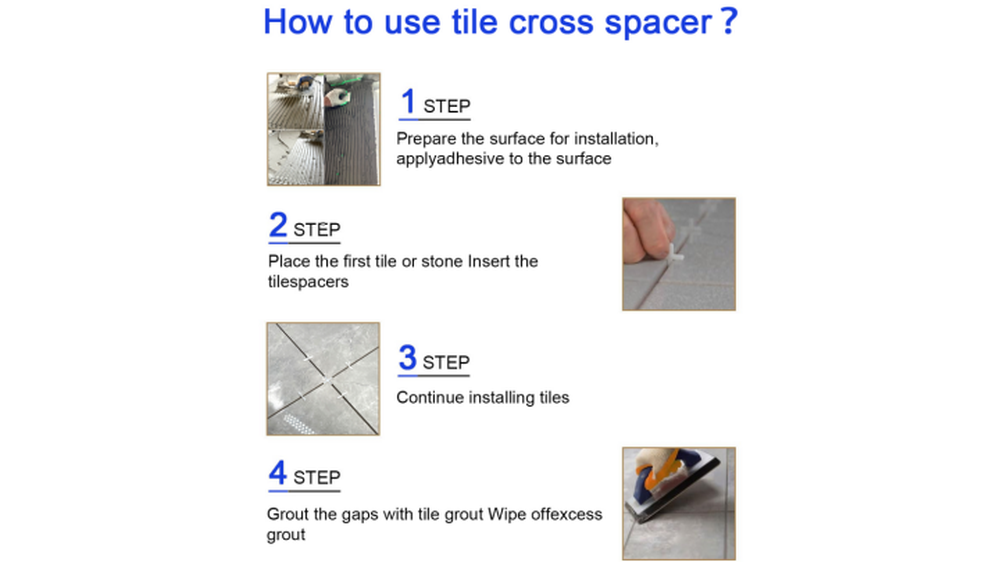
Step 1: Surface and Material Preparation
Ensure the substrate is flat, clean, and structurally sound. Dry-lay a row of tiles without adhesive to visualize the layout and confirm your chosen spacer size creates the desired look. This is the time to make adjustments.
Step 2: Applying Adhesive and Setting Tiles
Spread the thin-set mortar (adhesive) onto a manageable section of the substrate using the correct notch trowel. Begin setting tiles, pressing and twisting them slightly to ensure full coverage. After placing the first tile, immediately insert the spacers at each corner that will contact the next tile.
Step 3: Spacer Placement Strategy
For cross spacers, place one at each intersection where four tiles meet. For running bond patterns, use T-spacers at the end of each tile to maintain the offset. A common professional tip is to also place "stacking" spacers along the edges of tiles that are not yet bordered. These stand the spacer on its end, vertically between tiles, to ensure consistency on all sides as you work outward.
Step 4: Checking and Adjusting
As you work, frequently use a spirit level or a long straightedge to check for lippage and overall flatness. Spacers control the gap, but they do not automatically level the tiles. Make minor adjustments before the adhesive sets.
Step 5: Spacer Removal and Cleanup
Allow the adhesive to set sufficiently-usually 24 hours-until the tiles cannot be moved. Then, remove the spacers. Most plastic spacers are designed to be popped out easily. A pair of pliers can help with stubborn ones. Any adhesive that has squeezed into the joints should be carefully removed with a utility knife before grouting.
Common Tile Spacer Mistakes and How to Avoid Them
Even with the right tools, errors in technique can compromise the final result.
- Using the Wrong Size: Choosing a spacer that is too small for large-format tiles risks tile contact and failure. Using one that is too large for small tiles can make the installation look choppy.
- Inconsistent Placement: Forgetting to use spacers on every single joint, or placing them haphazardly, will create uneven lines. Discipline is key.
- Leaving Spacers In: While some cheap, single-use spacers can be grouted over, it is a best practice to remove all spacers. Leaving them in can create a hard point that prevents the grout from bonding properly and may be visible over time.
- Removing Spacers Too Early: Pulling spacers before the adhesive has set can allow tiles to shift, ruining all your careful work.
- Ignoring Expansion Joints: Spacers are for grout joints. They are not a substitute for required expansion joints in large areas, which must be filled with a flexible sealant, not grout.
Frequently Asked Questions (FAQ)
Can I reuse tile spacers?
It is not recommended. While some spacers may appear undamaged after removal, they can be weakened, stretched, or have adhesive residue that will prevent them from performing correctly on the next use. For the sake of a perfect result, use new spacers for each project.
What is the smallest grout line possible?
The smallest possible grout line is largely determined by the tile's manufacturing consistency. With perfectly rectified tiles, a joint as small as 1/32 inch (0.8 mm) is possible, but it requires an exceptionally flat substrate and a highly skilled installer. For most applications, 1/16 inch is considered the practical minimum.
Do I need spacers for a brick pattern?
Yes, absolutely. In fact, a brick (running bond) pattern requires more attention to spacing than a grid pattern to maintain a consistent offset. T-spacers are specifically designed for this task and are highly recommended.
How do I space tiles around outlets or corners?
For obstacles and corners, you may need to cut spacers in half or use small pieces to maintain the gap where a full spacer won't fit. The goal is to keep the grout line consistent right up to the obstacle. For outside corners, special corner spacers are available, but careful cutting and placement are usually sufficient.
Core Takeaways
- Spacers are Non-Negotiable: There is no professional alternative to using tile spacers for achieving consistent grout lines.
- Size and Type Matter: The choice of spacer is a technical decision based on tile size, pattern, and manufacturer guidelines.
- Technique is Everything: Consistent placement and proper removal are just as important as having the spacers themselves.
- More Than Aesthetics: Perfect grout lines are essential for the long-term structural integrity of the tile installation.
- Plan and Dry-Fit: Always test your layout and spacer choice before applying adhesive to avoid costly mistakes.
Conclusion: The Foundation of Flawless Tiling
In the pursuit of the perfect tile installation, it is easy to focus on the large, dramatic elements: the tile itself, the complex patterns, the expensive tools. Yet, time and again, it is the humble tile spacer that proves to be the most critical factor in determining the overall quality of the work. It is the tool that translates a vision of order and precision into physical reality. By understanding the different types, selecting the correct size with intention, and applying them with a disciplined technique, you elevate your work from simple construction to true craftsmanship. Perfect grout lines are not an unattainable ideal; they are an achievable standard. And the key to reaching that standard is, and will always be, the simple, powerful tile spacer.
Hot Tags: Tile Spacers for Achieving Perfect Grout Lines, China, manufacturers, suppliers, factory, customized, wholesale, buy


