




The Design Science Behind Durable and Lightweight Rolling Pads
If you've ever spent a day kneeling on a hard floor, you know the feeling: by mid-afternoon, your knees are sore, your back aches, and every time you need to move a few feet, you have to push yourself up, crawl, and drop back down. It's exhausting - and over the years, it can take a real toll on your body.

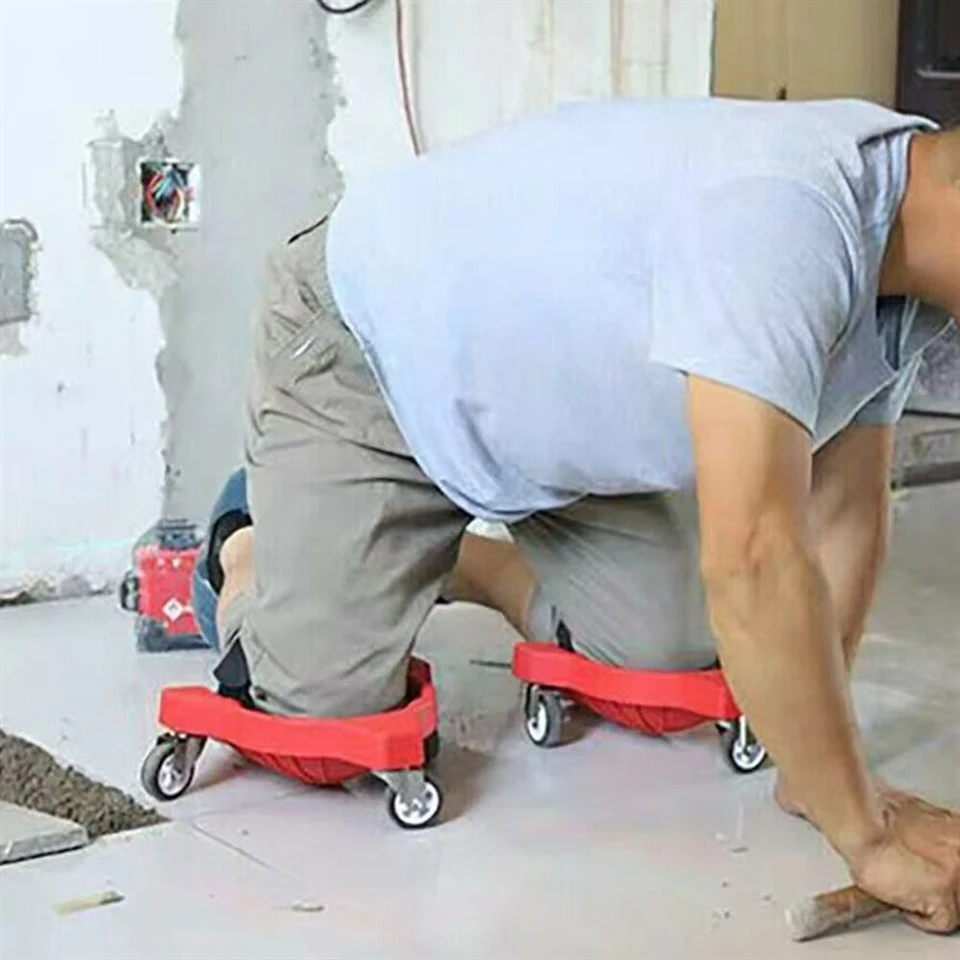
That's exactly the problem rolling knee pads were designed to solve. The pair shown in the image - a red, wheeled kneeling platform - is a perfect example of how smart engineering can make a world of difference. But not all rolling pads are created equal. The best ones balance two things: they're tough enough to last, yet light enough to use all day without adding fatigue.
Why Rolling Pads Matter
Traditional kneeling - even with foam pads - has a big downside: when you need to move, you have to stand up. That constant cycle of standing and kneeling adds up. Over an 8-hour day, a flooring installer might repeat this motion 300 to 500 times. It wastes time, burns energy, and puts strain on your knees, back, and wrists.
A rolling pad changes the equation. Instead of standing up to move, you simply roll. The pad supports your weight while the wheels do the work. The result? You stay on your knees, keep working, and save a surprising amount of energy.
Anatomy of a Great Rolling Pad: The 5 Key Elements
Let's look at what makes a rolling pad like the red one in the image work so well. There are five main components, each carefully designed to balance strength, weight, and comfort.
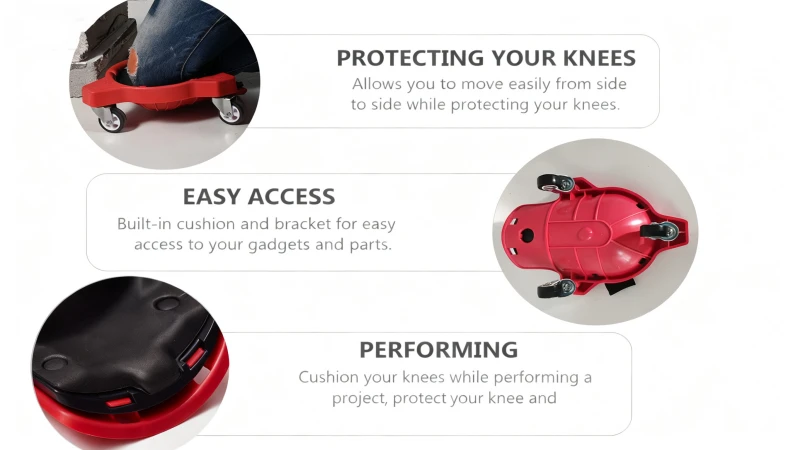
1. The Frame: Strong but Lightweight
The frame is the backbone of the pad. It needs to support your body weight without bending or cracking, yet stay light enough that you barely notice it.
Most quality pads use one of three materials:
- ABS plastic: Lightweight, impact-resistant, and affordable. Many pads in the 3–4 lb range use ABS.
- Aluminum: A step up in strength and durability, still relatively light (around 8 lbs). Common in professional-grade tools.
- Steel: The heaviest but most durable option. Often used in seated rolling pads that support 250+ lbs.
The red pad in the image appears to use a high-impact ABS-style frame - a smart choice for keeping weight down while maintaining enough strength for daily use.
2. The Cushion: Spreading the Pressure
A good cushion doesn't just feel soft - it spreads your body weight across a wider area of your knee. This reduces pressure points that cause pain.
Better pads use gel-foam or high-density EVA foam shaped to match the contour of your knee. Cheaper pads use thin sponge that flattens within an hour. The difference is huge: a quality cushion can reduce peak pressure on your knee by 50% or more.
3. The Wheels: Smooth Movement Without Scratches
Wheels are where mobility meets floor protection. Three things matter:
- Number: Three wheels offer great maneuverability and 360° movement.
- Material: Polyurethane (PU) or rubber wheels are non-marring - they roll smoothly without scratching tile, hardwood, or laminate.
- Swivel action: 360° casters let you move in any direction without lifting the pad.
The small wheels on the red pad are designed for tight spaces and finished floors - exactly what you want for indoor tile or flooring work.
4. Stability: Not Too Narrow, Not Too Wide
A good pad needs to feel stable under your knees. If it's too narrow, you'll tip. If it's too wide, it gets in the way.
Many pads use a triangular or wide wheelbase design to lower your center of gravity. This keeps you balanced while still allowing free movement. The red pad's layout shows this principle in action - your knees sit centered while the wheels provide a solid base.
5. Comfort Features: Straps, Grip, and Fit
Little details make a big difference during long days:
- Adjustable straps: Keep the pad centered on your knee without cutting off circulation.
- Silicone or textured surface: Prevents your knee from sliding around.
- Quick-release buckles: Let you take the pad off in seconds between tasks.
These may seem minor, but combined, they're the difference between a pad you tolerate and one you actually enjoy using.
Common Design Mistakes That Cause Early Failure
Not every rolling pad is well designed. Here are the most common shortcuts that lead to frustration:
- Hard plastic wheels: These scratch floors and roll poorly. Always look for PU or rubber.
- Thin, flat foam: It compresses fast and stops cushioning.
- Weak wheel mounts: The #1 failure point. If the wheel housing cracks, the whole pad is useless.
- Poorly placed straps: Straps that dig into the back of your knee cause more pain than they solve.
- Too heavy for the task: A 14-lb pad is overkill for a weekend backsplash.
Choosing the Right Rolling Pad for Your Work
Here's a simple guide to matching a pad's design to your needs:
For Professional Tile & Flooring Installers
- Durable frame (ABS, aluminum, or steel)
- High-quality cushion (gel or EVA foam)
- Non-marring PU wheels
- Replaceable parts (cushion, wheels)
- Adjustable, comfortable straps
For DIYers and Weekend Projects
- Lightweight ABS frame (3–4 lbs)
- Decent foam cushioning
- 3–5 swivel wheels
- Simple, secure strap
For Mechanics and Auto Detailers
- Flat platform or creeper style
- Tool tray or storage
- Wide wheelbase for stability
- Non-marring wheels for shop floors
For Gardeners and Painters
- 3-wheel agility for moving around plants or trim
- Lightweight, easy to carry
- Silicone grip surface to prevent sliding on grass or fabric
Why the Our Pad Works So Well

Looking at the red rolling pad in the photo, you can see several smart design choices:
- Bright red color: Easy to spot on a busy job site - you won't leave it behind.
- Compact, dual-pad format: Each knee has its own roller, allowing natural movement.
- Small, likely PU wheels: Ideal for smooth indoor surfaces like tile or finished concrete.
- Lightweight build: Based on the design, it's likely in the 3–4 lb range - easy to wear all day.
- Simple strap system: Keeps the pad in place without complicated buckles.
This type of pad is purpose-built for exactly the kind of work shown in the image: kneeling, moving, and working close to the floor for hours at a time.
Frequently Asked Questions
Are lightweight rolling pads less durable?
Not if they're well designed. A 3-lb ABS pad with quality wheels and strong connection points can outlast a heavy, poorly made pad. Durability comes from smart engineering and good materials, not just weight.
What's the ideal weight for a rolling knee pad?
For all-day use, 3–8 lbs is the sweet spot. Under 3 lbs may feel flimsy. Over 10 lbs usually means you're getting extra features like a seat - which is great if you need them, unnecessary if you don't.
Do I really need non-marring wheels?
If you work on finished floors (tile, hardwood, laminate), absolutely. Hard plastic wheels will leave scratches. PU or rubber wheels protect the surface and roll more smoothly.
How long should a good rolling pad last?
A well-made pad should last 3–5 years of daily professional use, or a decade for occasional DIY. Look for replaceable cushions and wheels to extend its life even further.
Is a seated pad better than a knee-mounted one?
It depends. Seated pads are excellent for all-day use because they let you shift weight off your knees. Knee-mounted pads are more agile and lighter, perfect for tasks that require frequent movement and tight-space work.
Conclusion: Good Design Protects Your Body
A great rolling knee pad isn't just a piece of plastic with wheels. It's the result of careful thinking about materials, geometry, comfort, and durability. The best durable knee pads are also lightweight rolling pads - because the people who use them every day need both.
Whether you choose an ABS pad for weekend projects or a professional aluminum model for daily work, focus on the fundamentals: a strong frame, a cushion that distributes pressure, smooth non-marring wheels, and a stable, comfortable fit.
Your knees are worth protecting. A well-designed rolling pad pays for itself in comfort, speed, and long-term joint health. The next time you kneel down to start a job, make sure you're on a tool that works as hard as you do.
Core Takeaway
- Balance is everything: The best rolling pads combine a strong frame with light weight - usually through ABS, aluminum, or steel.
- Five elements define quality: Frame, cushion, wheels, stability, and comfort features.
- Non-marring wheels are a must for indoor work - they protect floors and roll smoothly.
- Cushion design matters more than thickness: Look for contoured gel or EVA foam.
Related Keywords
durable knee pads, lightweight rolling pads, knee pad design, rolling knee pad, non-marring wheels, ABS frame, gel cushion, professional knee pads, tile flooring knee pad, ergonomic knee protection, DIY knee roller
Hot Tags: knee pads with roller, China, manufacturers, suppliers, factory, customized, wholesale, buy, Knee Blades Rolling Knee Pads, knee pads with wheels, Milescraft Kneeblades Durable Rolling Knee Pads, rolling knee pads lowes, Rolling Knee Protection Pad, Rolling Knee Scooter Pads


